
Mobile connectivity is no longer limited to office buildings and research facilities. Today, industries such as automotive, defense, telecommunications, mining, logistics, and smart manufacturing increasingly require wireless devices to be tested directly where they operate. As networks become more complex with 5G, private LTE, Wi-Fi 7, satellite communications, and emerging 6G technologies, transporting equipment to permanent laboratories is not always practical.
This shift is driving demand for the sea container OTA chamber, a mobile testing environment that delivers laboratory-grade RF performance wherever testing is needed. Instead of bringing prototypes and equipment back to centralized facilities, organizations can deploy a fully equipped RF testing laboratory closer to field operations, reducing delays while improving testing efficiency.
Whether validating connected vehicles, industrial IoT devices, or next-generation communication systems, mobile RF testing has become an essential part of modern product development.
Key Takeaways
Mobile RF testing enables faster validation directly at deployment sites.
A sea container OTA chamber combines mobility with laboratory-quality RF performance.
Portable OTA facilities reduce logistics costs and accelerate development cycles.
Industries including automotive, aerospace, telecom, and defense benefit from mobile RF testing.
Future wireless technologies will continue increasing demand for flexible RF testing solutions.
Why Mobile RF Testing Is Becoming Essential
Traditional RF laboratories have served the industry well for decades. However, today's wireless products are becoming larger, more connected, and deployed in increasingly complex environments.
Modern testing often requires engineers to evaluate devices in locations such as:
Manufacturing facilities
Smart factories
Automotive proving grounds
Military bases
Mining operations
Remote telecommunications sites
Temporary research facilities
Moving products between these locations and centralized laboratories can increase costs, delay development schedules, and introduce logistical challenges.
Mobile RF testing solves this problem by bringing the laboratory directly to the equipment instead of transporting the equipment to the laboratory.
What Is a Sea Container OTA Chamber?
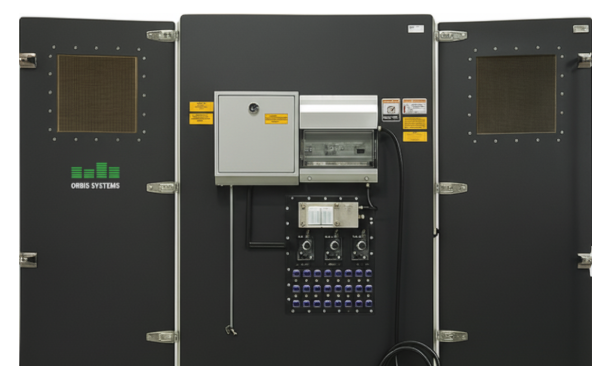
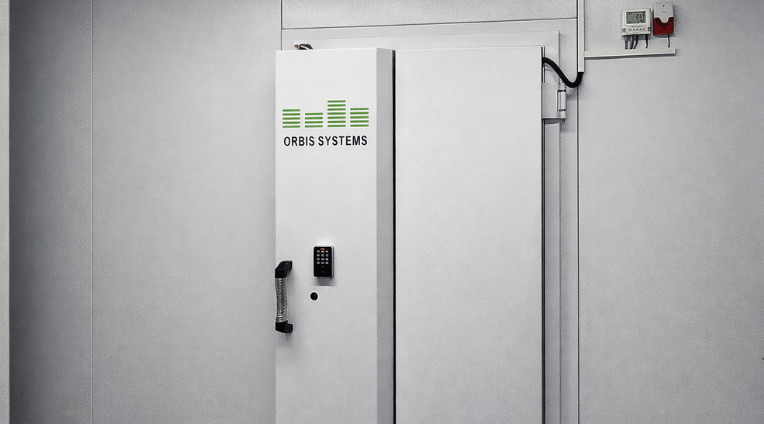
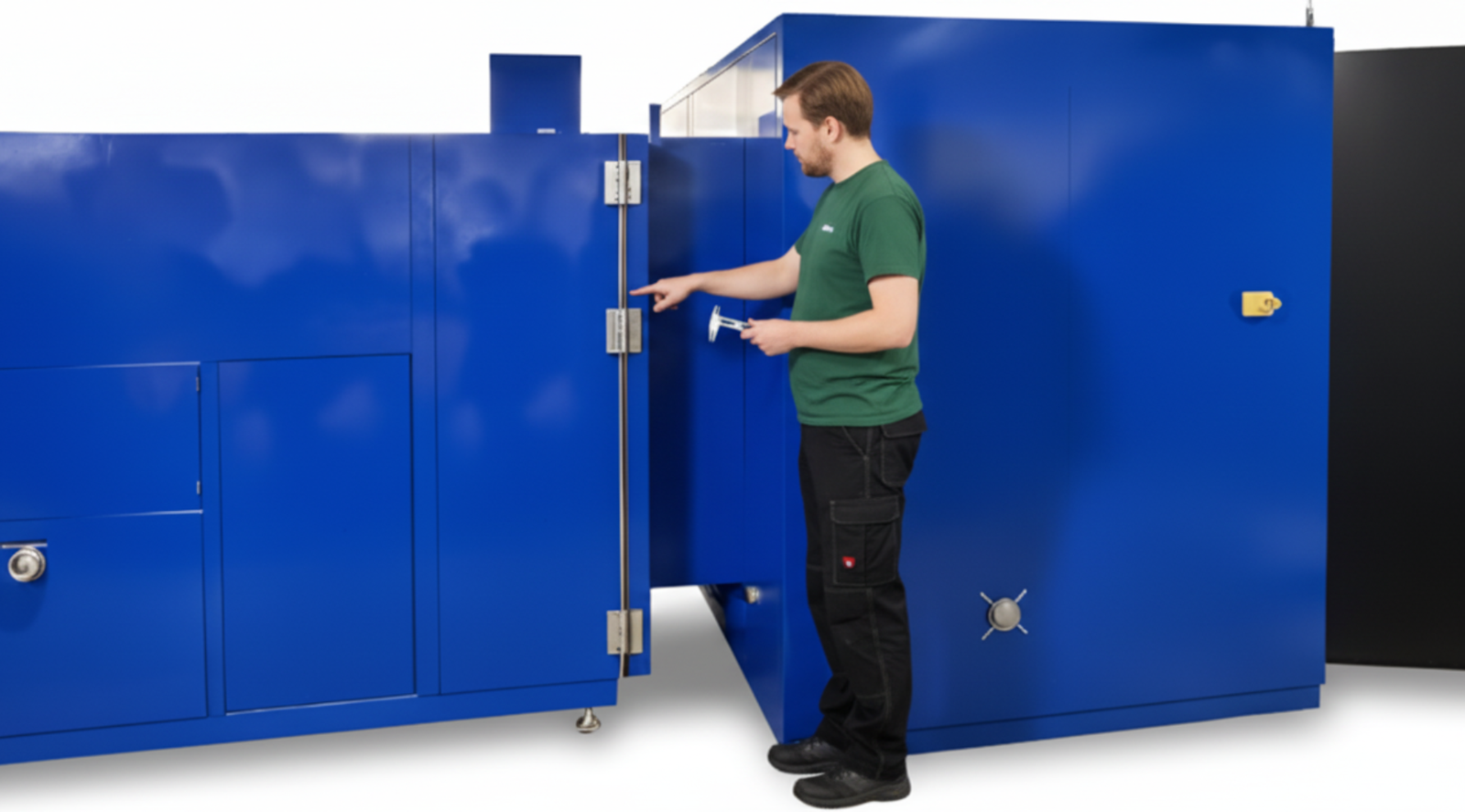
A sea container OTA chamber is a fully integrated RF testing laboratory built inside a modified shipping container. It combines RF shielding, anechoic absorbers, positioning systems, instrumentation, climate control, and automation software within a transportable structure.
Once delivered to a location, the chamber can operate much like a permanent OTA laboratory while remaining easy to relocate whenever project requirements change.
Because shipping containers are designed for global transportation, they provide an ideal platform for creating rugged, portable RF testing environments.
Why Demand Is Growing for Mobile RF Testing
Faster Product Development
Wireless product development cycles continue to shrink.
Instead of waiting weeks to schedule laboratory access or transport equipment, engineering teams can perform testing immediately at the project location.
This significantly reduces validation time.
Benefits include:
Faster design verification
Rapid troubleshooting
Immediate performance validation
Quicker certification preparation
Growth of Private 5G Networks
Private cellular networks are expanding across manufacturing, logistics, ports, and energy facilities.
Every deployment requires thorough RF validation before commissioning.
Testing these environments on-site provides engineers with realistic performance measurements that cannot always be replicated inside centralized laboratories.
Increasing Device Complexity
Today's devices often integrate:
Multiple antennas
Wi-Fi
Bluetooth
GNSS
5G
Satellite connectivity
Ultra-Wideband (UWB)
Testing these systems requires controlled RF environments capable of handling complex multi-radio scenarios.
A mobile OTA chamber provides that controlled environment without sacrificing flexibility.
Industries Driving Adoption
Automotive Testing
Connected vehicles rely on multiple wireless technologies operating simultaneously.
Manufacturers increasingly perform OTA validation at proving grounds rather than transporting vehicles to distant laboratories.
Mobile chambers simplify testing for:
Vehicle antennas
V2X communication
Telematics
Cellular connectivity
GPS performance
Defense Applications
Defense projects frequently involve testing at secure or remote locations.
A portable RF chamber enables controlled measurements while minimizing equipment transportation and maintaining operational flexibility.
Smart Manufacturing
Factories deploying Industry 4.0 technologies depend on reliable wireless communication.
Mobile RF testing supports validation of:
Industrial IoT sensors
Autonomous robots
Wireless gateways
Edge computing devices
Telecommunications
Network operators regularly validate:
Small cells
Base stations
Customer premises equipment
Private network infrastructure
Portable OTA laboratories make testing faster during network rollouts.
Benefits of a Sea Container OTA Chamber
Laboratory-Grade RF Performance
Modern mobile chambers are designed with high-performance RF shielding and absorber materials that deliver measurement accuracy comparable to many permanent facilities.
Deployment Flexibility
One of the biggest advantages is mobility.
Organizations can move the chamber between:
Customer locations
Manufacturing plants
Test tracks
Field sites
Research campuses
This flexibility maximizes equipment utilization.
Reduced Transportation Costs
Large equipment, vehicles, and industrial machinery can be difficult or expensive to move.
Testing them on-site eliminates many transportation expenses while reducing scheduling complexity.
Faster Troubleshooting
When issues occur during deployment, engineers can immediately perform controlled RF measurements nearby.
This minimizes downtime and accelerates corrective actions.
Scalable Testing Infrastructure
Organizations can expand testing capacity simply by deploying additional mobile chambers instead of constructing permanent RF laboratories.
This approach provides flexibility for growing projects.
Challenges Mobile RF Testing Helps Solve
Although mobile testing offers numerous advantages, it also addresses several long-standing industry challenges.
Limited Laboratory Availability
Many RF laboratories operate with busy testing schedules.
Portable facilities reduce dependence on centralized labs.
Remote Project Locations
Some projects occur far from urban testing centers.
Mobile laboratories eliminate lengthy transportation logistics.
Tight Development Deadlines
Engineering teams can complete testing earlier without waiting for laboratory availability.
Large Test Objects
Testing complete vehicles, industrial equipment, or oversized systems is often easier on-site than transporting them to permanent facilities.
Best Practices for Successful Mobile OTA Testing
Select the Right Chamber Configuration
Different projects require different chamber sizes, absorber layouts, and positioning systems.
Planning these requirements early improves testing efficiency.
Consider Environmental Conditions
Although the chamber provides a controlled RF environment, external conditions such as temperature, power availability, and site accessibility should be evaluated before deployment.
Automate Test Workflows
Integrating automated positioning systems and measurement software reduces operator workload while improving repeatability.
Automation also accelerates large test campaigns.
Schedule Preventive Maintenance
Routine inspection of shielding, absorbers, ventilation systems, and RF instrumentation helps maintain consistent measurement accuracy over time.
Expert Tips for Maximizing Mobile RF Testing Efficiency
Standardize testing procedures across all deployment sites.
Use automated reporting to reduce documentation time.
Verify chamber calibration before major projects.
Train operators on portable RF system setup and safety.
Plan transportation logistics alongside project schedules.
Regularly monitor shielding performance to maintain measurement reliability.
Bring Flexible RF Testing Closer to Your Projects
As wireless technologies continue to evolve, organizations need testing solutions that combine precision, flexibility, and mobility. Orbis Systems develops advanced RF testing solutions, including portable OTA chamber technologies, to help engineering teams perform reliable wireless validation across a wide range of industries and deployment environments.
Frequently Asked Questions
What is a sea container OTA chamber used for?
A sea container OTA chamber is used for over-the-air RF testing of wireless devices in a portable laboratory environment. It enables accurate testing at manufacturing sites, customer locations, proving grounds, and remote facilities.
Why are companies investing in mobile RF testing solutions?
Mobile RF testing reduces transportation costs, shortens development timelines, increases testing flexibility, and allows engineers to validate products closer to real operating environments.
Which industries benefit most from portable OTA chambers?
Automotive, aerospace, defense, telecommunications, industrial automation, mining, logistics, and smart manufacturing organizations commonly use portable OTA chambers.
Can a mobile OTA chamber deliver the same testing quality as a permanent RF laboratory?
When properly designed with high-quality RF shielding, absorbers, calibrated instrumentation, and environmental controls, a mobile OTA chamber can provide highly reliable and repeatable RF measurements suitable for many testing applications.
How does mobile RF testing accelerate product development?
Testing equipment directly at deployment sites reduces transportation delays, allows immediate troubleshooting, speeds up validation cycles, and supports faster engineering decisions throughout product development.



Write a comment ...